How a sectional garage door actually works
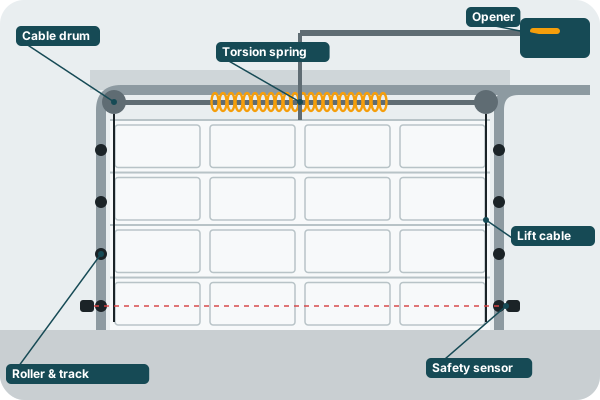
Most Lubbock homes have a sectional overhead door: four or five horizontal panels joined by hinges, riding on rollers in a pair of vertical and horizontal tracks. The door is heavy, often well over 100 pounds for a two-car steel door and much more for an insulated or wood one. It feels light only because a spring system balances almost all of that weight.
On most doors that system is a torsion spring (or two) mounted on a steel shaft above the opening. As the door closes, the spring winds up and stores energy; as it opens, the spring unwinds and turns cable drums that lift the door by steel cables attached to the bottom corners. Older and lighter doors may use extension springs that stretch along the horizontal tracks instead. The opener is only a guide. It pushes and pulls a door that the springs have already balanced.
The five most common failures
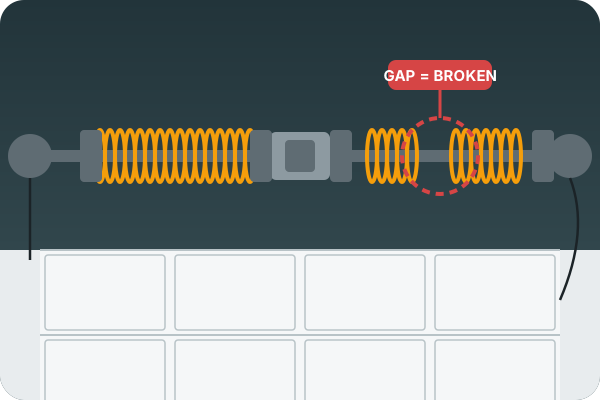
Springs. Springs are rated in cycles, where one open and close is one cycle. Many standard springs are built for around 10,000 cycles, which a busy household can use up in well under ten years. When a spring breaks, the door loses its balance and the opener can’t lift it safely. See garage door spring repair.
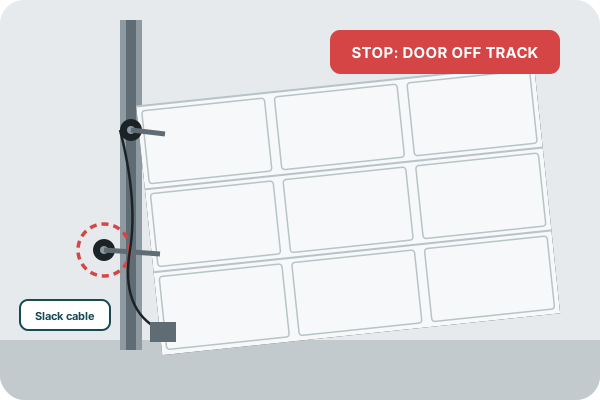
Cables and drums. Lift cables fray at the bottom brackets, especially where dust and moisture collect. A snapped cable lets one side drop, and the door twists in its tracks.
Rollers and tracks. Worn rollers wobble and bind. A bumped track or a strong gust can pull rollers out entirely. Our off-track repair guide explains what to do.
The opener and its sensors. Since the early 1990s, residential openers sold in the U.S. have had to include an automatic reversing system with external entrapment protection, usually a pair of photo-eye sensors about six inches off the floor. Dust, cobwebs, a bumped bracket or low winter sun shining straight into a sensor can all stop the door from closing. More in opener repair.
Panels and impact. Hail, wind and the occasional bumper dent or crack panels. Damage near a hinge or the top section can stop the door from rolling smoothly.
Repair or replace?
A broken spring, a worn roller set, a frayed cable or a failed opener gear is a repair on almost any door. Replacement starts to make sense when several sections are damaged, the door is no longer made so matching panels aren’t available, the door is wood that has rotted at the bottom, or you want better insulation for a garage that bakes in summer and freezes in winter.