Torsion & extension springs
Garage Door Spring Repair in Lubbock, TX
A loud bang from the garage and a door that suddenly won’t lift almost always means a broken spring. Here’s how spring repair works in Lubbock, what to check safely and what a proper replacement includes.
What Garage Door Springs Do
Garage door spring repair means replacing the torsion or extension springs that counterbalance the weight of the door, then adjusting the tension so the door is balanced and testing it with the opener. On a properly balanced door the springs do almost all of the lifting, and the opener only guides the door up and down.
That’s why a broken spring stops everything. A two-car steel door can easily weigh more than 100 pounds, and insulated or wood doors weigh much more. With the spring gone, that weight lands on the opener, which isn’t built to lift it, and on the cables and the person trying to raise the door by hand. Spring failure is the most common reason Lubbock homeowners call for garage door repair in Lubbock, and it is also the job where safety matters most.
Torsion Springs vs. Extension Springs
There are two spring systems on residential doors, and the repair is different for each.
Torsion springs
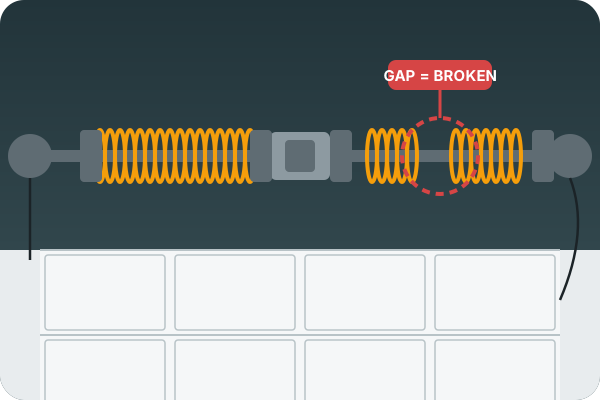
Torsion springs sit on a steel shaft directly above the door opening. Most single doors have one and most double doors have one or two. As the door closes, cables wind onto drums at each end of the shaft and twist the spring, storing energy. When the door opens, the spring unwinds and lifts. Torsion systems are smoother, easier to balance and more contained when a spring breaks, which is why most newer Lubbock homes have them.
Extension springs
Extension springs run along the horizontal tracks on each side of the door and stretch as the door closes. They are common on older and lighter doors, including many detached garages in older central neighborhoods. Each spring should have a safety cable running through its center. Without it, a breaking extension spring can whip across the garage. If yours don’t have safety cables, ask the technician to add them.
| Torsion | Extension | |
|---|---|---|
| Location | Shaft above the door | Along each horizontal track |
| Typical homes | Most newer and larger doors | Older and lighter doors |
| When it breaks | Gap appears in the coil; stays on the shaft | Can fly loose without a safety cable |
| Balance and feel | Smoother, easier to fine-tune | Can be jerkier, needs matched pairs |
7 Signs Your Garage Door Spring Is Broken or Failing
- A loud bang from the garage when no one was using the door.
- A visible gap of an inch or two in the coils of a torsion spring above the door.
- The door opens a few inches and stops, or the opener strains and reverses.
- The door feels extremely heavy when lifted by hand after pulling the release.
- Loose or tangled cables hanging beside the door.
- The door closes fast or slams in the last foot of travel.
- The door sits crooked, with one side higher than the other.
If two springs are fitted and only one broke, the door may still move but will be badly out of balance. That puts extra strain on the opener, which is why a spring failure is often followed by an opener problem if the door keeps being used.
Why Springs Break, and Why It Happens in Lubbock
Springs are rated in cycles, where one open and one close equals one cycle. Many builder-grade springs are rated around 10,000 cycles. A household that uses the garage as its main entrance can put four, six or more cycles a day on the door. At four a day, 10,000 cycles is about seven years, and at eight a day it’s less than four. Many Lubbock homes are still running the original springs installed when the house was built, so a break is a matter of when, not if.
A few other things shorten spring life. Rust and dirt on the coils add friction, and wind-blown dust gets into everything in a West Texas garage. Temperature swings from summer heat to winter cold stress the steel, and springs often snap on the first cold morning of the season. An out-of-balance door or a door that was fitted with springs the wrong size for its weight wears springs out fast. And a heavier door, such as an insulated replacement on the original hardware, needs springs sized for the new weight.
Safe Checks You Can Do First
You can confirm a broken spring without touching anything under tension:
- With the door closed, look at the torsion spring above the opening for a gap in the coils.
- Check whether the lift cables on both sides are tight and on their drums.
- Look at extension springs along the tracks for a break or a stretched-out section.
- Note whether there are one or two springs, and if you can see a color code or tag on the spring.
- Unplug the opener so no one tries to run it again before the repair.
Don’t loosen set screws, winding cones or bottom brackets, and don’t try to wind a spring with screwdrivers. Torsion springs store enough energy to lift the whole door and cause serious injuries when released improperly. Spring replacement is a job for a trained technician with proper winding bars.
If you need to get a car out before help arrives, read the emergency garage door guide first rather than forcing the door.
What a Proper Spring Replacement Includes
- Weigh or measure the door and identify the existing spring wire size, length and inside diameter, so the new springs match the door’s actual weight.
- Secure the door in the closed position and safely unwind any remaining tension.
- Replace the springs, usually both on a two-spring door, and inspect the shaft, bearings, drums and cables while everything is apart.
- Replace worn cables if they are frayed or rusted, since they share the load with the springs.
- Wind and balance the springs so the door stays put when lifted halfway by hand.
- Lubricate and test the door with the opener, check the travel limits and run the safety-reverse test.
Ask the technician which cycle rating they’re installing. Standard springs keep the price down; high-cycle springs rated for 20,000 cycles or more cost more but can double the time until the next break. If your door is heavy because of hail damage or an added layer, mention it, since the springs have to be sized for that weight.
What Affects the Cost of Spring Repair
| Factor | How it changes the price |
|---|---|
| Number of springs | Replacing both springs on a two-spring door costs more than one, but is standard practice. |
| Spring size and cycle rating | Larger wire and high-cycle springs cost more and last longer. |
| Door size and weight | Double, insulated and wood doors need heavier springs. |
| Torsion vs. extension | Converting from extension to torsion is a larger job with more hardware. |
| Other worn parts | Cables, drums, bearings and rollers are often replaced at the same visit. |
| Timing | After-hours or weekend service can add to the call fee. |
Be wary of very low advertised spring prices. Ask whether the price is per spring or for the pair, whether labor is included, and whether the door will be balanced and tested afterward.
Making New Springs Last Longer
A few habits help springs reach their rated life. Spray the coils with a garage-door lubricant a couple of times a year to cut friction and rust. Watch for the door drifting up or down when you stop it halfway, which is a sign the balance is off. Keep the door’s other moving parts in good shape, since binding rollers and dry hinges make the springs work harder. And have the door looked at during a routine tune-up every year or two, so worn cables and bearings are caught before they fail.
If your door has been hit by hail, wind or a car, the extra strain and binding can shorten spring life too. Our guide to hail and storm damage explains what to look for.
FAQ
Garage Door Spring Questions
Can I replace a garage door spring myself?
It isn’t recommended. Torsion springs are under extreme tension and need proper winding bars and training to replace safely. Mistakes cause serious injuries. Extension springs are somewhat less dangerous but still store a lot of energy. A technician can replace and balance them safely.
How long does garage door spring repair take?
On a typical residential door, a spring replacement takes about an hour or two once the technician is on site, including balancing and testing. Extra repairs such as cables or a bent track add time.
Why did my spring break in cold weather?
Steel becomes less flexible as it gets colder, and a spring that is already near the end of its cycle life often gives out on a cold morning. The cold doesn’t usually cause the failure on its own; it finishes off a spring that was worn.
Should both springs be replaced if only one broke?
Usually, yes. Both springs were installed at the same time and have the same number of cycles. Replacing one leaves a mismatched pair and an older spring that is likely to break soon.
Is a broken spring covered by a warranty?
Some new doors and spring replacements come with a parts warranty, and some installers warranty their labor. Check your paperwork and ask the company that installed the door. Ask about warranty terms before a replacement, too.
Can a broken spring damage the opener?
Yes. Running the opener with a broken spring forces the motor and gear to lift the full weight of the door, which can strip the gear or burn out the motor. Unplug the opener until the spring is replaced.
Talk to a local garage door tech
Broken spring? Get a local technician on the way.
One free call connects you with an independent garage door company that replaces and balances springs in Lubbock.
(806) 555-0163